




Author: Bobbie Mills, Head of Research at Lift Schools
Think of the classes you most love teaching - or the subjects you most enjoyed when you were at school.
More often than not, those will be classes where the teacher truly connected with the students and the room felt like a team with a common purpose.
The classrooms feel brilliant partly because when students feel cared for, invested in, and trust that their peers have their back, they are more willing to embrace challenges, are less afraid of making mistakes and will push themselves further into the rigour of what they’re learning.

At Lift Schools, we’re committed to delivering an excellent education for every child, in every classroom, every day. And central to that commitment is our belief that classes with stronger classroom relationships enable greater academic rigour, enabling every student to achieve their full potential.
Caring pupil-teacher-relationships don’t mean “being nice” at the cost of high standards. A supportive teacher must always be fully committed to pushing their students to achieve their very best.
Using the large scale of our trust, we aren’t just guessing that teacher-student relationships and classroom culture matter; we are now measuring the theory by launching the Cultivate survey.
Early data from the survey pilot - while limited in scale - reveal some promising insights: students who feel valued, capable, and empowered in a particular classroom may have stronger attendance than those who don’t, by up to seven days. Furthermore, a strong sense of classroom community could make a substantial difference to attendance.
At a time when student engagement is in decline across the sector1, particularly in Years 7 to 92, prioritising classroom conditions is not an optional extra. We strongly believe it is fundamental to raising attendance and achievement.
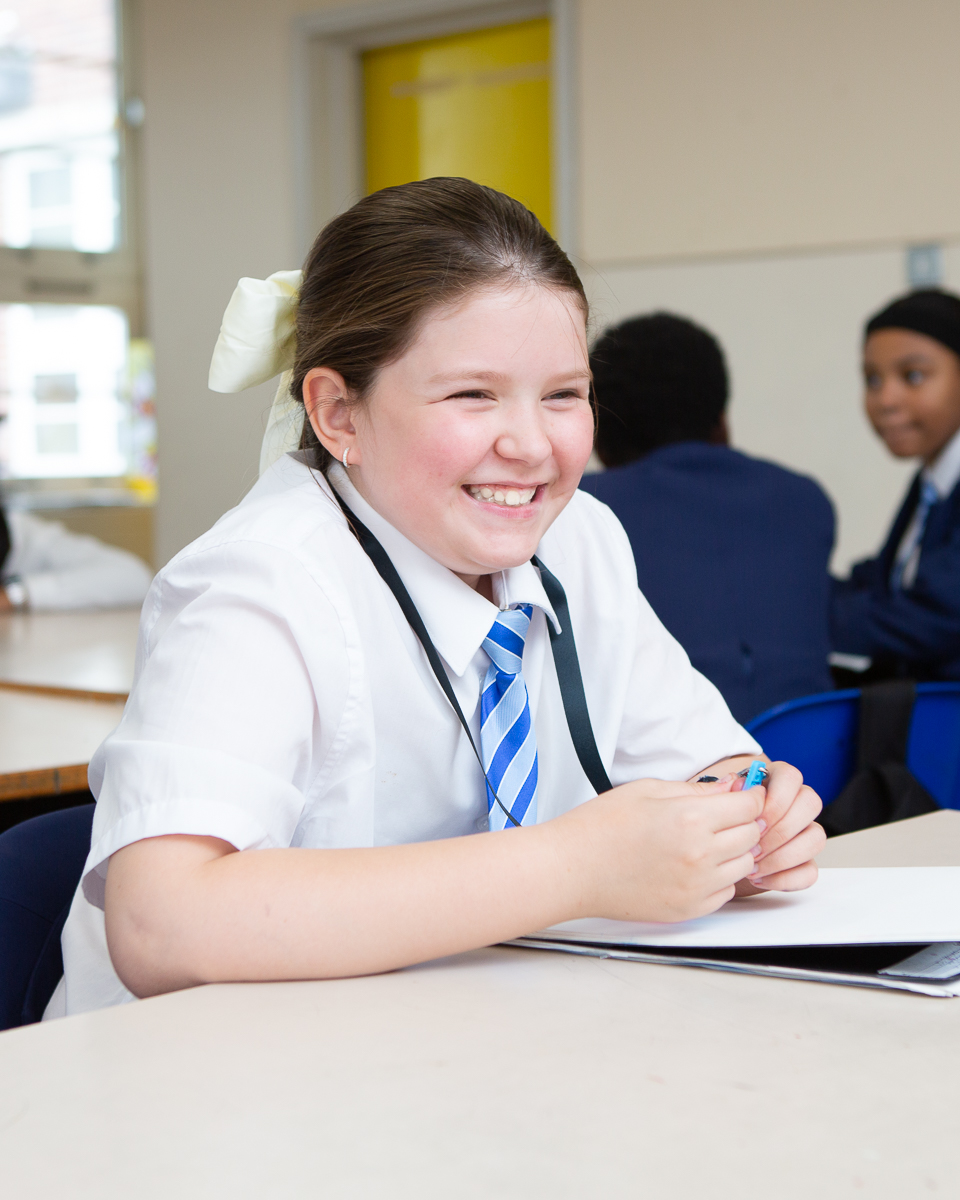
So why are we investing in the Cultivate survey? We were inspired by our insights from our 2024 Culture & Climate survey, which completed its successful second wave in January 2026. The survey, which approaches its third wave in January 2027, focuses on school climate and is the subject of a major statistical study in partnership with UCL.
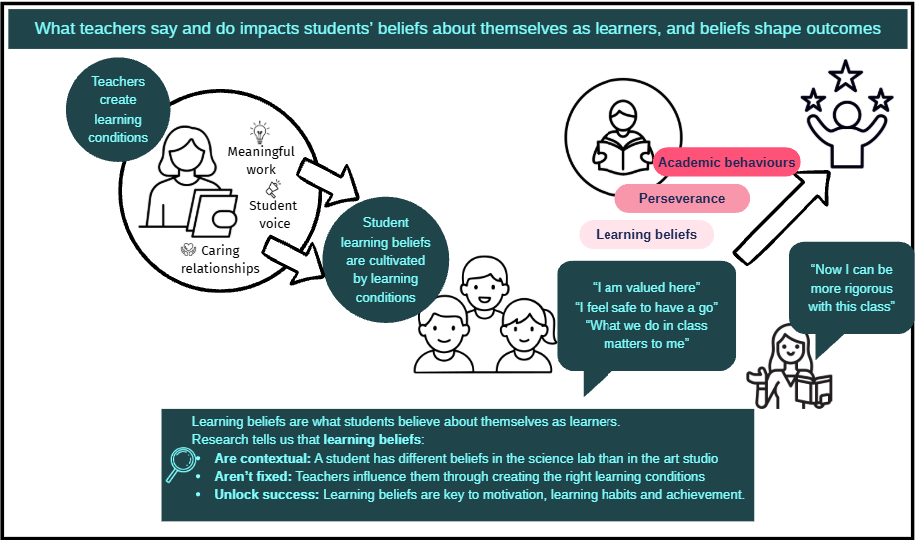
We are now drawing on growing evidence pioneered by the University of Chicago Consortium on School Research (CCSR) regarding the non-cognitive factors that shape student performance. Specifically, we are using their Cultivate survey, which measures classroom learning conditions by asking students directly whether key elements are present in the classroom:
When teachers deliberately shape these nine conditions, they directly impact a student's internal learning beliefs - the vital mindsets CCSR identifies as the key to unlocking the perseverance and crucial learning habits that enable young people to succeed in the classroom.
A student with strong learning beliefs fundamentally believes:
Crucially, these beliefs aren't fixed. In their literature review of the non-cognitive factors that shape student performance, CCSR explain that these feelings are context specific3. A student might feel a deep sense of belonging and capability in the art studio, but feel entirely disconnected in the science lab. These learning beliefs can also be invoked, for example by reinforcing positive identities before a test. Because these mindsets shift depending on the environment, it means teachers have the power to change them by intentionally altering the conditions in the room.
In short, when teachers create the right classroom conditions, they shape the learning beliefs that unlock academic success.
In December 2025, we successfully launched a pilot of the Cultivate survey with 15 schools (nine primaries and six secondaries) surveying key stage 2 and key stage 3 students from Year 5 through to Year 9.
To understand how schools could best utilise this data, the pilot tested two different feedback models:
While schools found the aggregate data highly useful and actionable, the most transformative potential emerged among the teachers who opted for direct feedback.
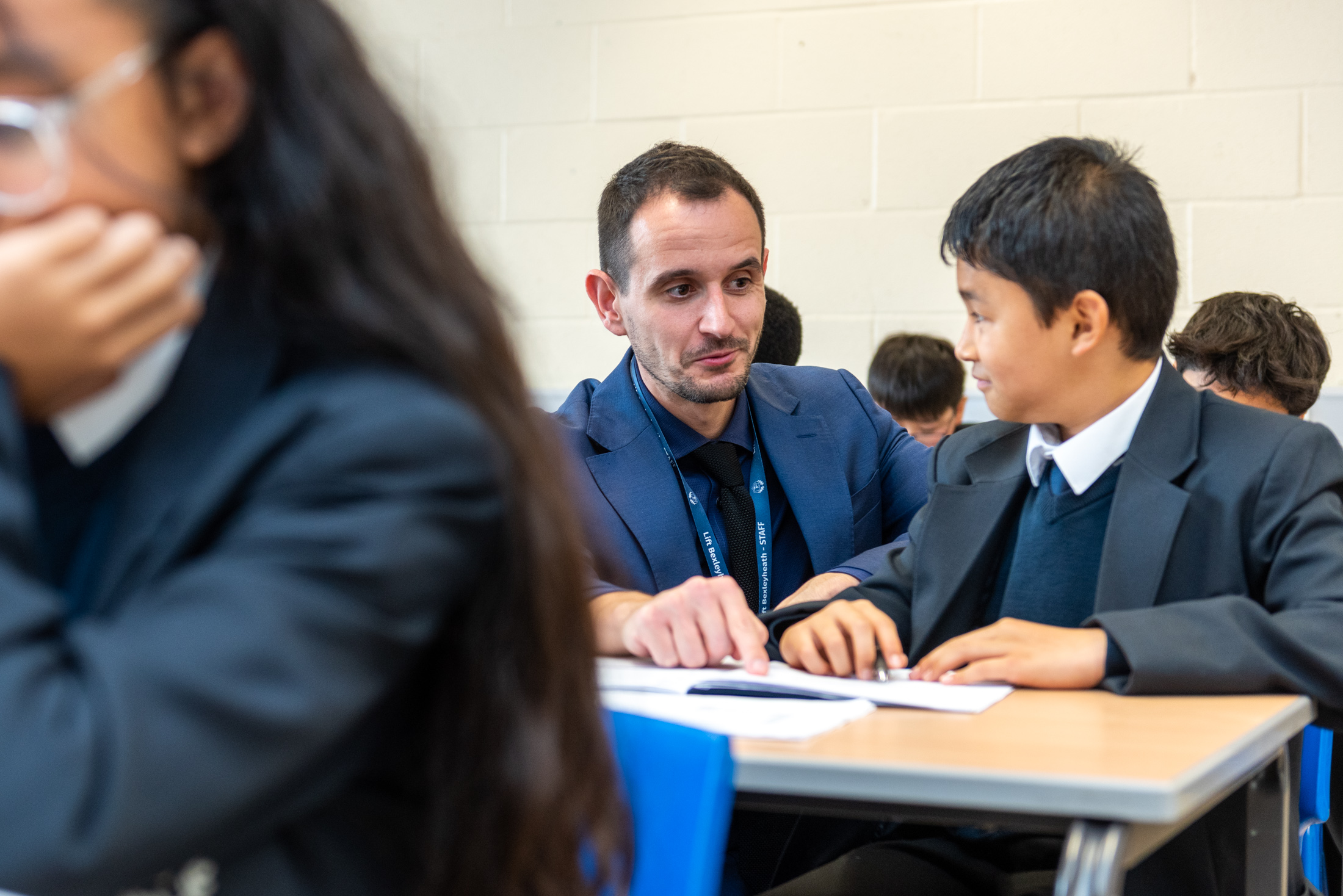
Four brave, pioneering teachers stepped forward to receive direct feedback from their students, supported by regular one-to-one and group coaching sessions with our Director of Strategic Improvement Johanna Klinsky.
Pioneering a cultural shift like this isn’t easy. The coaching sessions highlighted real system challenges, from managing teacher workload to navigating mid-year timetable changes that disrupted class groupings. Mirroring student data back to a teacher can also be a purposeful but vulnerable experience, as the initial reactions from our colleagues show.
Early insights - while limited to a small sample - show a positive connection between strong learning beliefs and better student attendance. This connection, along with our broader findings, has led to three key reflections that will guide our next steps and help strengthen our approach to KS3 engagement.
The teachers worked in different ways to respond to the student feedback. Some used the data to reflect on and improve how they welcome new students into their classroom, while others turned it into a group activity to explore what having choices in the classroom really looks like. Meanwhile, some chose to discuss the responses directly with their students, opening up a safe and respectful dialogue on how to improve the learning environment together.
The rewards were swift. After just one-and-a-half terms, one teacher shared how the data helped her to positively change her classroom dynamics.
How did she achieve this? She visited her students’ other lessons to show support and encouragement. She began each ‘turn and talk’ in her own class with an icebreaker so the students could get to know each other. Ultimately, she made sure the students knew she cared about them and felt more comfortable contributing in her class.

Experiences like these reinforce our conviction that direct student feedback is the most powerful tool for improving classrooms. Looking ahead, our aim is to expand this opportunity so that every teacher in our network can safely receive direct feedback from their students.
But our immediate, highest priority is rolling out the Cultivate survey for our KS3 teachers. We believe that this is where the survey will unlock the highest potential for impact and transformative classroom change.
This focus is critical because early adolescence (ages 10–14) is a pivotal window for shaping a child's learning beliefs. At this age, students are deeply preoccupied with questions of identity:
The Cultivate survey measures the exact conditions needed to answer those questions positively, giving KS3 students exactly what they need to stay engaged and succeed.
To deepen our understanding of the ideal conditions for this phase of a student’s development, we are partnering with the Reach Foundation on KS3 Futures to test innovative ways to make early secondary education truly unforgettable. We believe the sector must develop true KS3 specialist teachers who excel at building relational, rigorous environments. This urgent need has also been recognised at a national level by the Department for Education’s launch of the KS3 Alliance.
Ensuring a strong KS3 foundation is the key to unlocking long-term success for every child.
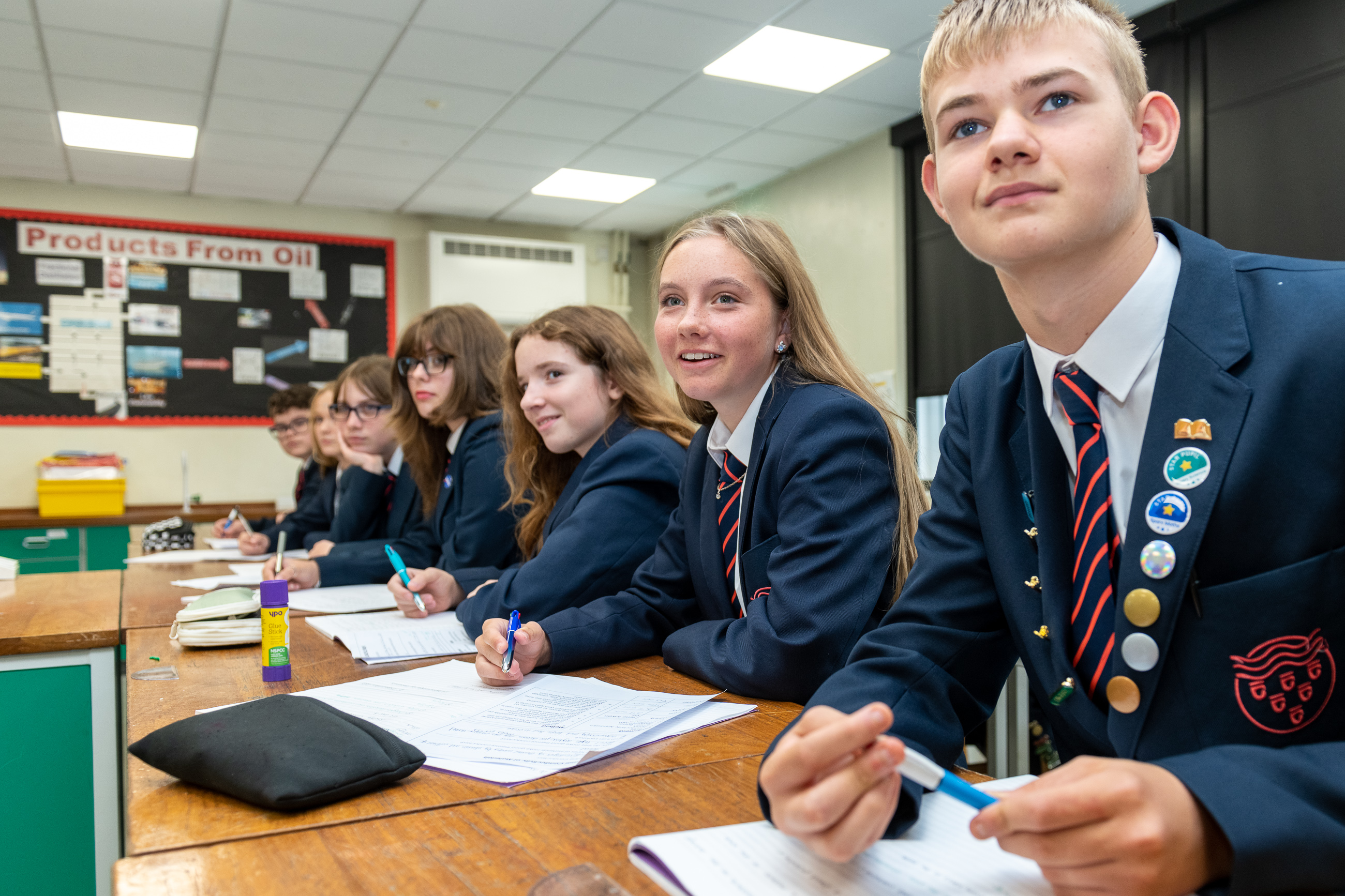
Where’s the proof? How do we know this is worth investing in? Can we be confident this will work in our context, beyond the context and evidence of Chicago?
The theory underlying the survey suggests that unlocking learning beliefs leads to stronger perseverance and more engagement in academic behaviours among students. We can test part of this by looking at attendance.
Early insight from the secondary schools involved in our pilot is promising. The sample size is small and the data is not yet longitudinal so we can only claim correlation and not causation.
We find that students with stronger learning beliefs have stronger attendance. Our pilot data analysis indicates that students with strong learning beliefs could attend up to seven more days in a school year than a student with poor learning beliefs4. We also see correlation between learning conditions and learning beliefs.
Listening to student voice has proven its value tenfold at Lift Schools. Our Culture and Climate survey has opened up a valuable strand of work on KS3 Futures. Our ongoing research partnership with UCL, funded by the Nuffield Foundation, will continue to establish any direct causal relationships between school climate, belonging, attendance, and attainment. The first of five major reports, outlining initial key findings, is due this coming December.
We know that building a culture of direct feedback requires a thoughtful, supportive shift for our people. But as our pioneering teachers have shown, when we give educators the insights they need to cultivate the right classroom conditions, we unlock the student mindsets that drive long-term academic success. We look forward to bringing this transformative opportunity to every classroom in our network.


1 - Jerrim, J. & Kaye, N. (2025). The decline in pupils’ emotional engagement with school. How does England compare to other countries? (CEPEO Working Paper No. 25-03). UCL Centre for Education Policy and Equal Opportunities.
2 - Lift Schools *2025). The KS3 ‘cliff edge’: A call to action to re-engage our youngest secondary students
3 - https://consortium.uchicago.edu/publications/teaching-adolescents-become-learners-role-noncognitive-factors-shaping-school
4 - Based on actual attendance in Autumn term, extrapolated across a full academic year.

